LinkedIn isn’t just a place to upload your resume anymore.
It’s become one of the most powerful platforms for personal branding, B2B marketing, and lead generation, especially for Small to Medium Businesses (SMBs), founders, and service-based businesses.
But here’s the thing…
Most people are still using it like it’s 2015.
And that’s exactly why the opportunity is so big.
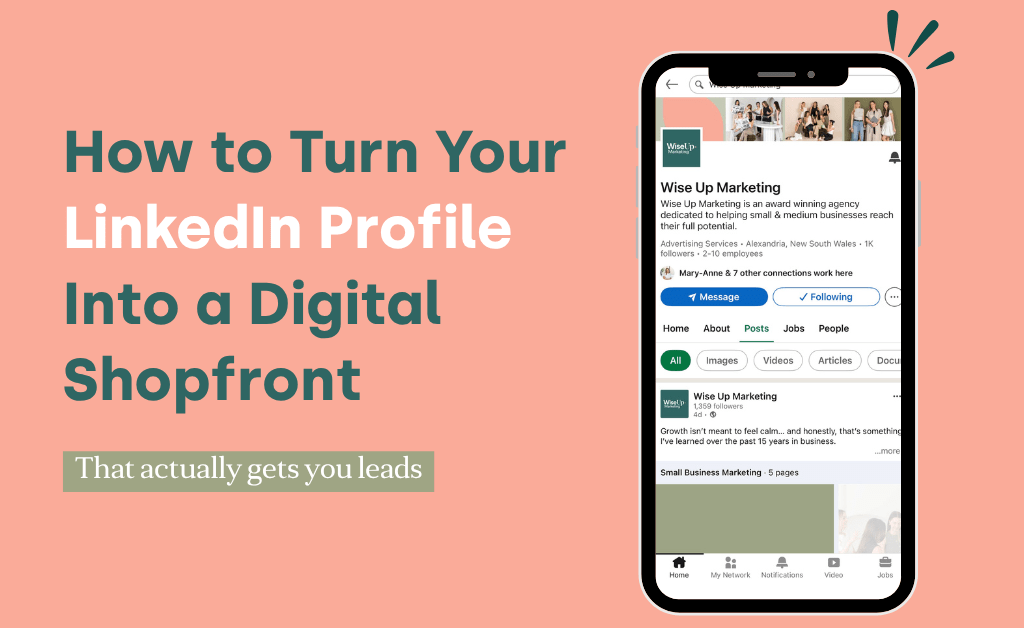
LinkedIn is your digital shopfront (whether you like it or not)
Think of your LinkedIn profile like a storefront on a busy street.
Before someone ever messages you, they’ve already looked at:
- Your headline (the signage)
- Your banner (the window display)
- Your featured section (what you’re “promoting”)
- Your recent activity (your reputation)
So if your profile is outdated, unclear, or inactive…
You’re losing opportunities before the conversation even starts.
Why LinkedIn matters more than ever right now
LinkedIn is experiencing a major shift driven by three key changes.
1. The rise of SMBs and founders
More professionals are moving into entrepreneurship, with a significant increase in users adding “Founder” to their profiles in recent years.
2. AI is changing career paths
With AI reshaping industries, many professionals are positioning themselves publicly to build authority and opportunity.
3. Trust is the new currency
People don’t just buy from brands anymore; they buy from people they trust.
Your LinkedIn presence is often the first impression before a call, enquiry, or referral ever happens.
In fact:
- 76% say professional networks are critical for business growth.
- 64% rely on trusted community input for purchasing decisions.
- 79% say online authenticity is as important as in-person presence.
Your LinkedIn presence directly influences trust.
Fix your LinkedIn profile first (before you post anything)
If your LinkedIn isn’t performing, start here.
1. Your headline (this matters more than you think)
This is not your job title.
This is your positioning.
Instead of:
“Marketing Manager”
Try:
“Helping SMBs grow through strategic digital marketing that turns attention into leads.”
Simple. Clear. Outcome-focused.
2. Banner + Featured Section (your best real estate)
This is your “first impression” zone.
Use it for:
Most people leave this blank, which is a huge missed opportunity.
3. About section (stop sounding like a robot)
This should sound like a human explaining what they do.
Not a corporate biography.
Answer:
- Why should someone trust you?
Keep it simple. Keep it real.
4. Activity (this is your credibility check)
If your last post was from 2023, people notice.
LinkedIn rewards consistency, not perfection.
No activity = no perceived relevance.
Comments are the most underrated growth tool on LinkedIn
Here’s what most people miss.
Comments now get impressions too.
That means:
- You can grow without posting.
- You can reach new audiences instantly.
- You can build authority in other people’s content.
A few smart comments a day can outperform inconsistent posting.
How often should you post on LinkedIn?
You do not need to post daily.
A realistic strategy is:
- A few thoughtful comments per day
- Consistent profile activity
That’s it.
Consistency beats volume. Always.
LinkedIn is a trust platform, not a posting platform
LinkedIn is not about going viral; it is about being remembered.
The people winning right now are not the loudest, they are the most consistent, clear and intentional.
Your profile is already telling a story about you.
The only question is, is it the right one?
Want help turning LinkedIn into a lead machine?
If your LinkedIn isn’t generating enquiries, referrals, or authority, it’s not doing its job.
We help businesses turn LinkedIn into a consistent visibility and lead generation system through:
- Personal branding systems
Reach out, and let’s build your LinkedIn properly.